
IIoT Trend #1: Edge AI Moves From Pilot to Production
2026 marks the inflection point where Edge AI scales from experimental pilots to production deployments across manufacturing. Learn how on-device inference is transforming real-time decision-making on the factory floor.
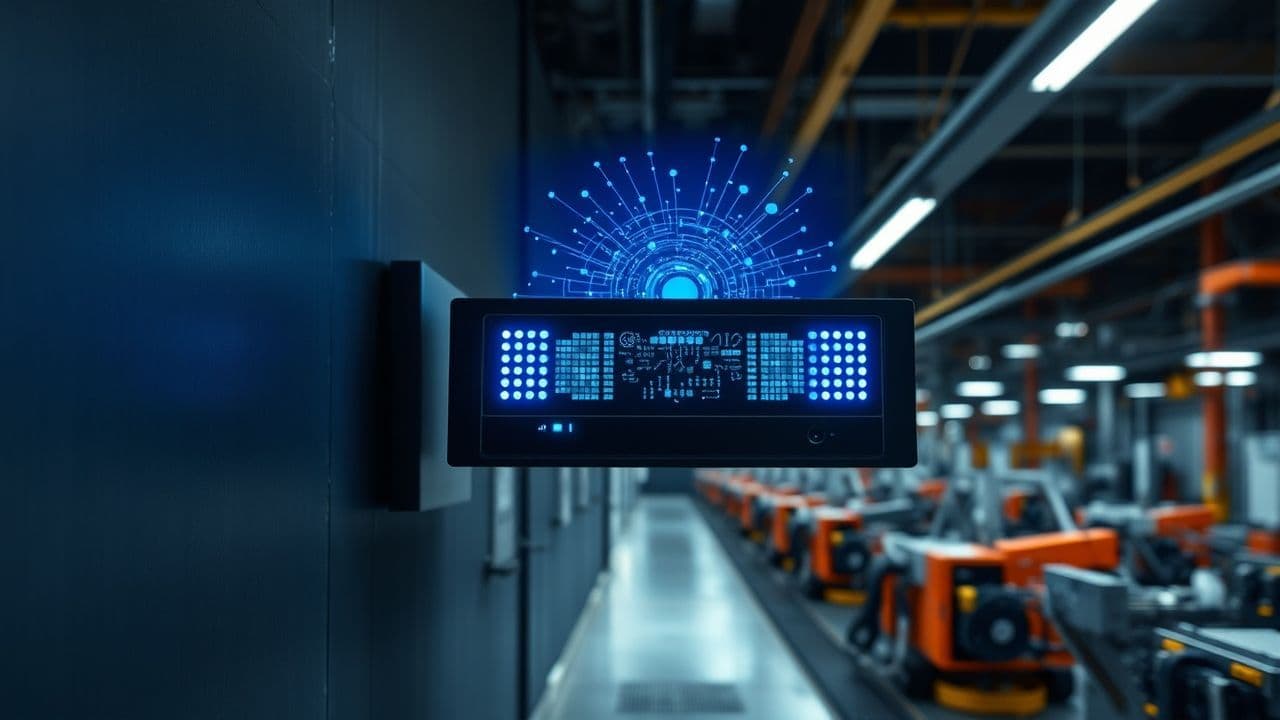
IIoT Trend #1: Edge AI Moves From Pilot to Production
One of the most transformative shifts in industrial IoT for 2026 is the move from cloud-centric analytics to on-device AI inference at the edge. Instead of streaming massive volumes of sensor data to the cloud for processing, more IIoT systems are analysing information directly on gateways, sensors, and local edge servers.
This approach - often called Edge AI - changes the tempo of decision-making. Responses happen in milliseconds, with machines reacting immediately without waiting for a round trip to the cloud.
Why Edge AI Matters for Manufacturing
Traditional cloud-based analytics introduce latency that is unacceptable for many industrial use cases:
- Predictive maintenance requires sub-second anomaly detection on vibration data
- Quality inspection via computer vision needs real-time reject decisions at line speed
- Autonomous robotics cannot wait 100ms for a cloud response when avoiding collisions
Edge AI eliminates this bottleneck by running inference models directly on the production floor.
2026 Use Case: Real-Time Weld Quality Inspection
A discrete manufacturer deploys edge AI cameras on a robotic welding line. Each camera runs a lightweight computer vision model on an embedded GPU, analysing every weld bead in real time. Defective welds are flagged within 50ms - fast enough to halt the robot before it moves to the next joint.
The system processes 2TB of image data per shift but only sends 50MB of summarised quality metrics to the cloud - a 97% reduction in data transfer.
Key Challenges
| Challenge | Detail |
|---|---|
| Power consumption | Running neural networks on edge devices increases energy demands; neuromorphic chips and quantised models are emerging solutions |
| Model management | Deploying and updating ML models across hundreds of edge devices requires robust MLOps pipelines |
| Hardware fragmentation | The edge AI chipset market is fragmented across NVIDIA Jetson, Intel Movidius, Google Coral, and proprietary ASICs |
| Data governance | When data stays at the edge, centralised audit trails and compliance become harder to maintain |
Market Context
The global Edge AI market is projected to grow from USD 24.91 billion in 2025 to USD 118.69 billion by 2033 at a CAGR of 21.7%. In manufacturing specifically, over 87% of surveyed manufacturers agreed that devices should become more intelligent and process data at the edge.
What This Means for Your Factory
If you are still running all analytics in the cloud, 2026 is the year to evaluate edge AI for your highest-latency-sensitive use cases. Start with a single production line, measure the latency improvement, and build your business case for broader rollout.
Sources: