
The Asset Administration Shell Explained: Industry 4.0's Standard for Machine-Readable Asset Data
Every machine builder ships asset data in its own format - PDFs, spreadsheets, proprietary configurator exports. The Asset Administration Shell is the IEC-standardized container meant to end that, and in 2026 it's moving from German reference architecture to products you can actually install. Here's what it is, how submodels work, and how to pilot one.
The Asset Administration Shell Explained: Industry 4.0's Standard for Machine-Readable Asset Data
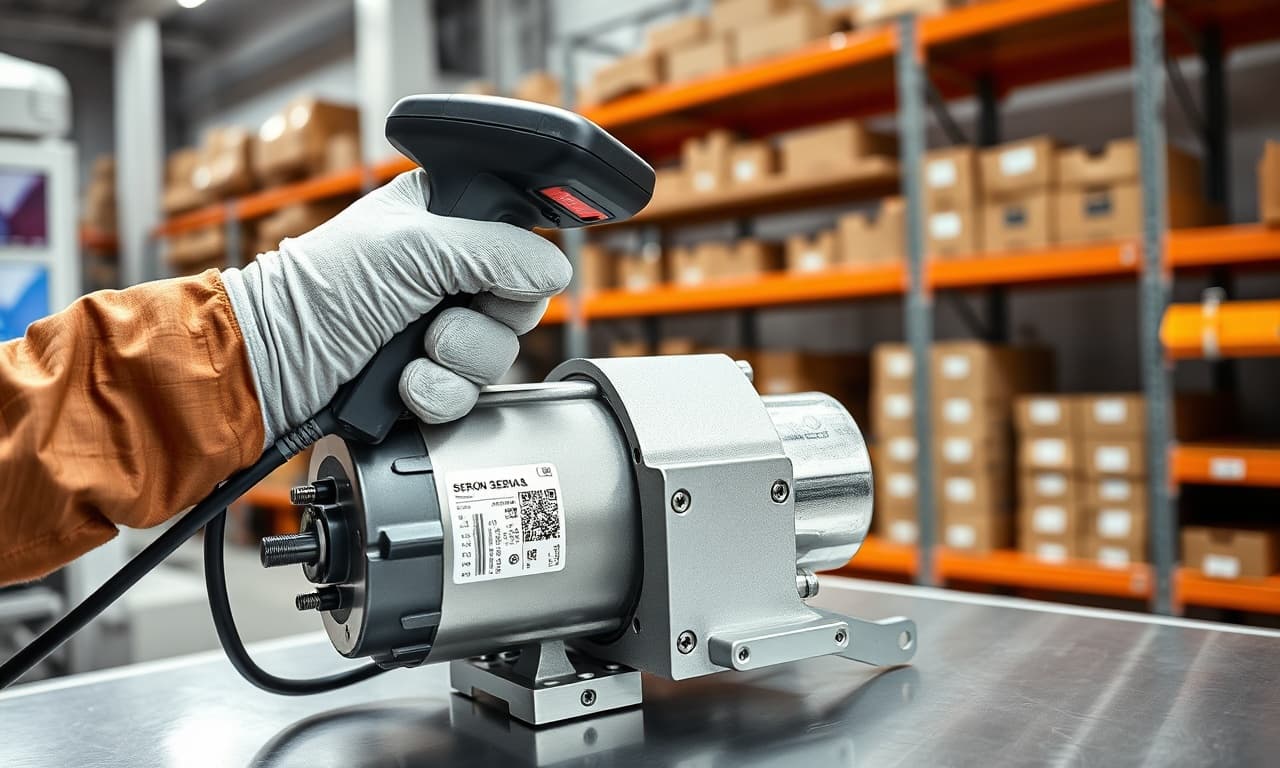
Order a servo motor, a conveyor module, and a vision sensor from three different vendors, and you'll get three different kinds of documentation back: a PDF datasheet, a spreadsheet of technical parameters, and a login to a vendor web portal. None of it is structured the same way, none of it talks to your MES or CMMS without manual re-entry, and none of it updates itself when the vendor issues a firmware revision or a new certificate. The Asset Administration Shell (AAS) is the Industry 4.0 answer to that problem: a standardized, machine-readable container for everything a system needs to know about a physical asset, defined so that any AAS-compliant tool can read it regardless of which vendor built the machine.
It's not a new idea - it has been part of Germany's Plattform Industrie 4.0 reference architecture since the mid-2010s - but 2026 is the year it stopped being mostly a specification exercise. The core structure is now a published international standard, the submodel catalog has grown past 80 templates, and open-source tooling exists to implement it without a vendor platform license. If you've read our Purdue Model and ISA-95 explainer, think of the AAS as giving Level 2-to-Level 3 asset data a common shape, instead of a different export format per vendor at every level boundary.
What the AAS Actually Is
Strip away the Industry 4.0 branding and an AAS is a structured document - typically JSON or XML, packaged as an .aasx file - with two parts:
- The Asset Administration Shell itself, which identifies the physical asset (a unique ID, a manufacturer, a serial number) and points to the submodels that describe it.
- Submodels, which are the actual content: technical parameters, a digital nameplate, a bill of materials, maintenance documentation, or live operational data.
The structure is defined by IEC 63278-1:2023, published 13 December 2023 and adopted as the European standard EN IEC 63278-1 from February 2024. A second part, covering the information meta-model in more detail, followed as IEC 63278-2 (the British adoption, BS EN IEC 63278-2, was published in May 2025), and a third part addresses security provisions. Being an IEC standard - not just a consortium whitepaper - is what lets a machine builder in Germany, a systems integrator in Vietnam, and a plant in Texas all implement "AAS" and mean the same thing.
The body that maintains the standard's practical half - the submodel catalog - is the Industrial Digital Twin Association (IDTA), an industry association that grew out of earlier ZVEI and Plattform Industrie 4.0 work. As of a February 2024 academic survey (Sakurada, de la Prieta, and Leitão, published in IEEE Access), the IDTA had announced 84 submodel templates and formally released 18 of them - a number that has kept growing since. Each submodel gets an IDTA number, a version, and a spec document, the same way a protocol gets an RFC.
Submodels: The Reusable Building Blocks
The point of standardizing submodels isn't bureaucratic tidiness - it's so two different vendors' assets expose the same kind of data in the same shape, so one piece of software can read both without custom mapping. A few of the most widely implemented:
- Digital Nameplate (IDTA 02006) - the electronic equivalent of the metal plate riveted to a motor housing: manufacturer, serial number, product designation, manufacturing date. Now at version 3.0.1 (October 2025).
- Technical Data (IDTA 02003) - structured technical parameters (voltage, torque, IP rating, dimensions), at version 2.0 as of March 2025.
- Handover Documentation (IDTA 02004) - the manuals, certificates, and drawings that normally arrive as a folder of PDFs on a USB stick at commissioning.
- Contact Information (IDTA 02002) - who to call for support, structured so a CMMS can pull it automatically rather than someone hunting through a vendor's website.
- Hierarchical Structures Enabling BoM (IDTA 02011) - how an asset's own bill of materials nests, useful for spares planning.
A battery-specific nameplate submodel (IDTA 02035) was derived directly from the Digital Nameplate template - which is also the mechanism several vendors are using to prepare for the EU's Digital Product Passport requirements we covered in an earlier post: the DPP's "machine-readable record linked to the physical product" requirement and the AAS's submodel model are, deliberately, a close fit.
From Static Document to Live Digital Twin
An AAS instance doesn't have to be static. The simplest implementation is a QR code on the nameplate resolving to a fixed .aasx file of documentation and specs - useful, but no more dynamic than a PDF. The more capable implementation exposes the AAS through a live API (the subject of further parts of the IEC 63278 series), so a submodel reports current operating state, not just factory-shipped specifications. That's the difference between an AAS as a digital datasheet and an AAS as the front door to a genuine digital twin - and why the AAS and OPC UA specifications are being developed with explicit interoperability between them: OPC UA can serve as the transport that makes AAS data queryable in real time, the same role it plays in the broader interoperability layer we described in our OPC UA explainer.
A Worked Example: Commissioning a Conveyor Module
Picture a machine builder shipping a modular conveyor section to an automotive parts plant. Today, commissioning means a printed nameplate, a PDF manual emailed to the project engineer, a spreadsheet of motor parameters for controls, and a support number nobody saves anywhere useful - all of which has to be found again, by someone, the first time something goes wrong.
With an AAS shipped alongside the physical unit:
- The plant's commissioning engineer scans a QR code on the conveyor frame, which resolves to the unit's
.aasxpackage - either hosted by the vendor or handed over on delivery. - The CMMS ingests the Digital Nameplate and Contact Information submodels automatically, populating the asset register without manual data entry.
- The maintenance team pulls the Handover Documentation submodel for the wiring diagram and service manual, instead of searching a shared drive.
- When a motor on the conveyor needs replacing two years later, the Technical Data submodel gives the exact part specification to a buyer who never has to call the original vendor to ask.
None of this requires the plant to adopt a specific MES or CMMS vendor - it requires both the machine builder and the plant's software to speak AAS, which is precisely the point of an IEC standard instead of a proprietary format.
Getting Started Without Over-Building
You don't need a plant-wide AAS platform to evaluate this. A reasonable pilot:
- Pick one asset class you buy repeatedly - a motor type, a sensor family, a conveyor module - where standardized onboarding data would save real commissioning time.
- Use open-source tooling first. Eclipse BaSyx is the most mature open-source AAS implementation: its Java SDK is compliant with AAS Metamodel Version 3, and Python, Rust, and .NET SDKs are also available, all under permissive open-source licenses. You can read and generate
.aasxfiles without buying a platform license. - Start with Digital Nameplate and Technical Data. They're the most widely implemented submodels and the easiest to populate from data you already have in a PLM or ERP system.
- Ask new vendors about AAS support before you ask about dashboards. A supplier who can hand over a conformant AAS instance at delivery saves your team the manual re-entry work every single unit currently costs you - a cost worth running through the ROI calculator against your current commissioning time per asset.
Where This Fits in the Bigger Picture
The AAS doesn't replace OPC UA, MQTT, or your Unified Namespace - it standardizes a different layer: what shape asset data takes, independent of how it moves. That distinction matters because most "interoperability" failures aren't transport failures; they're semantic ones, where two systems successfully exchange a message neither can actually parse the same way. For the broader data governance problem standardized asset data is meant to solve, see our Industrial AI data readiness guide; for the adjacent terms this post assumes, see the glossary and our courses on IIoT architecture fundamentals.
It's still early. The IEEE Access review of AAS research is blunt that "several challenges must still be addressed to facilitate widespread adoption," and most of what's shipping today is nameplate- and documentation-level, not live operational twins. But the standard is published, the tooling is free, and the catalog of ready-to-use submodels is large enough that a pilot no longer requires writing a specification from scratch - which is a meaningfully different starting point than this technology had even two years ago.